Advances in CLL treatments have significantly improved survival rates, making survivorship and long-term health a growing priority for people living with CLL. Dr. Alessandra Ferrajoli highlights her survivorship care research, including the importance of maintaining a healthy lifestyle through regular exercise, staying current with cancer screenings, and keeping up with vaccinations to support overall well-being.
Expert Panel:
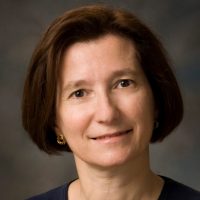
Dr. Alessandra Ferrajoli, The University of Texas MD Anderson Cancer Center
Transcript:
Dr. Alessandra Ferrajoli: So, I would like to focus on survivorship initiatives that are initiatives that I share with Dr. Broadway-Duren as well. And I always like to start my discussion just taking a little spotlight on what is CLL today. What is very important is there are going to be 22,000 new cases of CLL in 2026. But because people with CLL live with such a long time, it is actually the most prevalent type of leukemia that is in the Western countries with about 235,000 people living with CLL. And it has unique characteristics. Two-thirds of the patients are going to be older than 65.
It’s more common in male and in people of white ethnicity. This helps us to understand why we will see certain manifestations in CLL. Then just to put a very positive spin, those are, again, data from the CER, the Center for End Results, that show that the five-year relative survival for patients with CLL is 90 percent. And it’s likely to continue to increase because the CER survival for 2017 is already at 92 percent. What is really striking is that if we go back a few years, if we go back to 1975, that percentage was only 68 percent. It’s really major, major changes for this disease.
And how did we accomplish this? We accomplished first of all with better treatment. Now that we have treatments that are so good, target therapy, a number of targeted therapy, cellular therapy, monoclonal antibodies that try to trick the CLL cells through different mechanisms, I think that focusing on survivorship and focusing on how to keep people with CLL healthy is even more important because we know that with therapy we can really prolong life and make it to be a normal life. This has been shown, also, again by research. In fact, if we look on the left side of the screen where there is a red line, that red line is going down.
And that is the cause of death in patients with CLL being CLL. So, less and less people are dying of CLL. We are seeing an increase in cause of death by other causes, in particular by cardiovascular disease, by other type of cancer, and to a less number, to infection. So, this is why survivorship is so important. The therapies are so good. The therapies can prolong life. So, it’s important now to tackle those other causes of death. And this is the survivorship initiative that we have at our center. It’s important to understand that the definition of survivor includes everyone with a diagnosis of cancer from the day first that the diagnosis is made.
So, we should not think that a survivor is only somebody that has completed treatment. No. survivor is from the very first day. In order to support, again, the health of the survivorship, we have designed this algorithm that focuses on several aspects of the wellbeing. But in particular, it focuses on what are the lifestyle assessment and cancer screening and vaccinations. So, those are really the three key factors for survivorship. Assess your lifestyle. Check where you are with your cancer screening. And checking where you are with your vaccinations.
We have reviewed these in detail because everyone may think what we need to do as far as cancer screening is written in stone and is very clear. That is not the case. There are many guidelines that are different from each other and are supported by different organizations. But not only the guidelines can be different, but we created in this review a last column that we call special consideration for CLL. Because we feel that CLL, the counts with immunosuppression, immune dysfunction should be treated differently. And not necessarily what is a guideline for a healthy individual should be applied for CLL.
As an example, for older patients that are healthy, many guidelines discuss stop screening for prostate cancer at age pretty much 69 or 70. But people with CLL are immunosuppressed. And I think there is support for maybe prolonging the screening and screening past that age. And the same thing for a colonoscopy. It is true that guidelines don’t want to screen after age 75. But that is for a healthy individual. For a patient with CLL, I think those guidelines should be not so strict, and a discussion with the physician should be made before we decide whether we should stop screening or not.
In fact, we have conducted, with support of CLL Global, quality improvement initiatives where we have given numerous reminders to our patients when they come for their visits regarding where they are with their cancer screening. What we have seen that is very interesting, because if we didn’t plan our quality initiative ran right through the COVID pandemic, we have seen that where the cancer screening decreased during the COVID pandemic here, then it rebounded to the pre-pandemic levels. So, we’re doing very well in cancer screening when we alert the patient, when we remind the person with CLL how important this part of their healthcare is.
Where we are doing a little bit less well based on our quality initiative is with vaccination. Because again, we have seen despite a reminder for vaccination and a discussion of the importance of vaccination, the level of vaccination, the percentages of vaccinations that we had pre-pandemic have not yet been reproduced in the post-pandemic years. So, I think this is, again, a message that we want to give that we know there is some hesitation for vaccination. I know there is some concern. However, they are a really important part of the preventive care. And they can be effective in the patients with CLL. Then, as I said, another very important aspect is lifestyle.
It’s amazing what positive immune effect are present by both what they call acute and regular exercise. So, short burst of exercise really stimulates our immune system. The same happens for regular exercise. For patient with cancer, various types of cancer, it has really shown exercise during therapy really helps the treatment be more effective and give better results. So, we have, therefore, completed the program Health for CLL where we showed that by testing different treatment modality, not only are our patients more active, they lose some weight, but there is benefit in their immune system. And we have moved to a new program that is called Health for CLL 2 that we have also recently completed enrollment.
But patients are still going through the intervention to further improve this aspect. So, this is where my focus is for this presentation today. It’s for the health support and survivorship.
Jeff Folloder: Thank you very much. If I can, I’d like to play back what I think I heard. One, things are getting better. Our survivorship is getting better. Two, the comorbidities are still a thing and need to be managed. And three, there’s hope. Get up out of your chair, go move around, get some exercise in, and live well.