
At the 2026 CLL Global Alliance Meeting, Dr. William Plunkett explains the origins of the CLL Global Research Foundation and looks back at 50 years of CLL research.
Guest
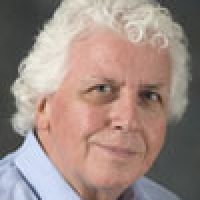
William Plunkett, PhD
Scientific Advisory Board
CLL Global Research Foundation
Transcript:
Dr. William Plunkett:
I’m Bill Plunkett. I’ve worked in molecular and biochemical pharmacology at MD Anderson for 50 years. And I just recently – that is in September – retired and so I haven’t been doing much with the prior activity since that time.
When I started at MD Anderson, I think when we would have group discussions, CLL was one disease that was considered by experts at the time to be a hopeless case. And then, subsequently, there’s been developments through new agents and new approaches. So, I think the real breakthrough was one that – well, it happened at MD Anderson. And that was to recognize a particular drug, fludarabine, as being effective. And this really shocked the world of therapies.
And developed further with – became more – there were other agents that came along that facilitated this drug. And so, it lasted for probably 20 years before the current therapeutic approaches of targeted therapies that is specifically aimed at individual molecules or proteins in the cells that would be specifically affected.
CLL Global Research Foundation, well originated through, I believe, through a discussion by my colleague with – our mentor, Emil Freireich, J. Freireich.
And my colleague was Michael Keating, of course. And Keating was given an amount of money by a donor and they told him to buy a new refrigerator or a centrifuge or something or another and he said, “That’s not what I wanna do.” So, Dr. Freireich convinced him that he should start – I’m sorry. Sorry. So, Dr. Freireich convinced Michael Keating that he should start essentially what became Global Research Foundation, now 20 years on. And he did that and this was one of the Global Research Foundation – CLL Global – is sponsored by donors and largely who have been affected by chronic lymphocytic leukemia.
And it just came forward over that period of time. But now it really is amazing to see in meetings like the one that we’re currently involved with today. And people who come to this because of the ability to do research funded by the CLL Global Research Foundation. It’s really remarkable.
funding mechanisms through the government or through pharmaceutical companies is highly dependent upon how those agencies are feeling about the development of say, CLL, today.
And some will say, “Well, it’s made so many advances that we don’t need to fund these people anymore,” because we’re finding out this morning and continually there are so many things about chronic lymphocytic leukemia that we haven’t known. And that by the research that brought forward an understanding of how these elements of the disease could be combated then further advances really have been made and what we’re looking for, of course, is a cure for the disease.
I’ve been involved with CLL Global from the beginning and I think that Michael Keating was the real driver for bringing this forward. And full credit should reside with him and we’re grateful for his approach to therapeutics and his constant ability to come up with new ideas, new approaches to inspire the investigators in the field.