
Our recent CLL Global Research Foundation Town Hall featured CLL Global President, Dr. William Wierda, and Dr. Alessandra Ferrajoli, from The University of Texas MD Anderson Cancer Center. Watch the full webinar.
Expert Panel:
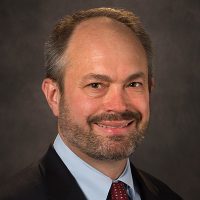
Dr. William Wierda, President & CEO, CLL Global Research Foundation

Dr. Alessandra Ferrajoli, The University of Texas MD Anderson Cancer Center
Transcript:
Jamie Forward:
So, Dr. Ferrajoli, let’s turn to you for your take on CLL research. Can you share your updates?
Dr. Alessandra Ferrajoli:
So, yes, thank you for the high-level view that Dr. Wierda gave us from the results from ASH. And I was asked to focus on a couple of updates, 1.) Is work from our institution that was sponsored by the CLL Global Foundation and that was actually presented as a Purdue presentation by one of our fellows. So, we are very proud of this work. And it focus on our efforts in improving the compliance with vaccination and cancer screening in patients with chronic lymphocytic leukemia.
The reason why we did this work is because, as is known to this community, there is a very high risk that the immunodysfunction associated with the CLL can predispose people with CLL to the development of other cancer.
And there is also concern that the immunizations that are normally given to the individual may either be omitted or may not be considered so important for people that have CLL. So, we decided to initiate what we call an improvement project, a performance improvement project that looks at how to best make sure that everyone is up to date on immunization and cancer screening. So, what we did, we really looked at this over the years, and we wanted to see our reminders that were given as part of a survey as well as important reminders when the patients came to the clinic would change over time, again, how effective this strategy is.
And we also looked at seeing whether there were certain pockets of patients, certain type of patients that maybe were particularly behind in the immunization and the cancer screening. Now, when we initiated this project, we initiated it in June of 2019, so everyone can appreciate how this was a pre-COVID era. We didn’t know that we would be going through a pandemic.
And so, we didn’t know that besides assessing the efficacy of our initiative, we will also be going through some times that are changing and changing in terms of also the attitude toward vaccination as well as the real physical accessibility to medical facility and the risk of being seen in a medical facility.
So, we really didn’t expect to conduct the survey during this time. But this gave us additional information and I think valuable information. So, the group is pretty large, more than 1,000 patients, and those are the characteristics of the people that received at least one of our surveys. And just to summarize, I brought some examples. For example, we looked at the compliance with the influenza vaccination and as we can see, we had very high compliance prior in the year 2019 to 2020.
However, the compliance decreased a little bit to a lower level in 2023 and 2024, and we attributed this to a general maybe skepticism and tendency to not want to receive vaccination unless absolutely necessary.
So, what we see is that it ran over time for influenza vaccination is toward a decline in the use of this vaccination. Very different was what we saw with the COVID-19 vaccination where we had a very high vaccination rate when the disease initially presented, obviously, because this is a way to assist in building the herd immunity and in really increasing the ability to defend against the vaccination. And then, we have seen a decline and kind of a plateau reached in COVID vaccinations.
So, I would say that the COVID pandemic has had an effect pretty large on vaccination, however, when we looked at the influenza vaccination, we did see that our strategy of administering a series of surveys and mostly reminding the patient about the importance of this vaccination, did improve the compliance and the completeness of the influenza vaccination.
So, I would say this demonstrated that adding attention in the clinic and discussing vaccination gives results with improved vaccination, which was something very different instead with the cancer screening trends. What we see is we look at the mammogram on the top and the colonoscopy on the bottom, and we were able to note that while during the COVID pandemic, there was a decline in the completeness of the cancer screening. This rebounded to values that are similar to pre-COVID or even higher.
So, this in terms of cancer screening was really related to accessibility and the risk to be in a medical facility and undergo testing. So, there was more a delay related to the pandemic rather than a decrease in the use. And also, for this, we noted that repeating a series of surveys really improved, as we can see, improved the number of patients that undergo screening. Examples of this are the skin cancer screening and the PSA screening.
So, basically, what we concluded was that a very simple health maintenance survey that can be repeated at every visit and a particular attention to focusing during the visit carving out a little portion of the visit to review what we call health maintenance will improve the vaccination rate and the cancer screening rate.
We also noticed though that there were some differences according to the characteristics of the patient. The older patients tended to have a better adherence with these recommendations. And we also noticed that even if in CLL, we see that the majority of the patients tend to be white, there was a lower skin cancer screening and a lower rate obtaining PSA screening for the patients that were of different ethnicity. So, this is particularly important to be reminded.
So, again, this was presented as a part of my presentation and its work sponsored by the CLL Global Research Foundation that we are very proud of. And we are going to take this concept of improving health maintenance, improving cancer screening to a higher level.
We were able to receive funds from the National Cancer Center Institute to allow us to test if using a test that is called multi-cancer early detection test. That is a test based on molecular sequences that are present in the blood and they can be used to identify up to 50 different types of cancer. This is, of course, due to the advances that are being in much learning in medicine, and so we will be offering to our patients with CLL to give us an additional blood sample. This will be analyzed for the presence of any cancer signal, and then we will be recommending additional testing as needed.
The reason why we want to do this, this is an example of a case, is because this multicancer screening test have been particularly useful in identifying cancer at early stage and particularly cancers that tend to be aggressive in nature. So, we will like to be able to identify any potentially aggressive cancer very early in our patients as it was done on these patients where a cancer of the tonsil was identified very early, and therefore could be treated in a much earlier phase than if we wait for that cancer to become manifest and give symptoms.
And then to conclude the part that was assigned, I was assigned to again highlight important studies at ASH.
And the one that made the plenary session and we were all very proud of seeing this study in the plenary session is the CLL17 trials. We were proud not only because it’s a study in patients with CLL and sometimes CLL doesn’t get necessary as much of the spotlight as some other condition, but also because confirmed the validity of some of the strategies that our institution has implemented for quite some time.
And that Dr. Wierda already reviewed with you using combination of ibrutinib and venetoclax, using triple combination with newer BTK inhibitors. So, what the CLL17 compared was the strategy of continuous therapy with BTK inhibitor toward the fixed duration therapy that the fixed duration therapy was the combination of a BCL2 inhibitor with an anti-CD20 monoclonal antibody or combining the two targeted therapies.
And as we can see, this as a very large study. Patients were randomized in two to three arms, and actually it was quite impressive that they were able to enroll almost 1,000 patients in less than two years. And it was mostly in Europe with some participation outside of Europe. Those were the hypotheses to see if fixed duration therapy would be as good as continuous therapy with ibrutinib (Imbruvica), and the response to treatment that are in the slides, I think we all are aware and very happy that whatever strategy we use, we’re going to see a very high response rate in excess of 80 percent for all the three arms.
And as Dr. Wierda mentioned before, some studies give us even response rate in the 90 percent and those treatments in particular when we look at the one that we are proposing as fixed duration, a combination of venetoclax and obinutuzumab, and venetoclax and ibrutinib are able to give us undetectable measurable residual disease. That means we can really achieve deep remissions, a remission that can be sustained for quite a long time.
The results that were presented are actually quite early because for a study of this type, we already know that we will need a follow-up of at least nine years before we can see really more final results. And we can declare maybe one of the combinations superior, but that’s nearly up to three years all the three strategies are very valid and effective.
And we notice our high is the overall survival and again, overall survival very similar for the three approaches. So, this concludes the presentation that I have.