
Our recent CLL Global Research Foundation Town Hall featured CLL Global President, Dr. William Wierda, and Dr. Alessandra Ferrajoli, from The University of Texas MD Anderson Cancer Center. Watch the full webinar.
Expert Panel:

Dr. William Wierda, President & CEO, CLL Global Research Foundation
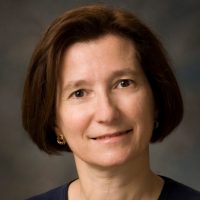
Dr. Alessandra Ferrajoli, The University of Texas MD Anderson Cancer Center
Transcript
Jamie Forward:
Okay, great. So, Dr. Ferrajoli, this one comes from Shawn: What research is ongoing regarding hereditary propensity of CLL, and what progress has been made?
Dr. Alessandra Ferrajoli:
So, I would say that this is a situation that is being increasingly recognized.
Over the years, there have been several papers that have shown that up to 10 percent of the patients with CLL are going to have a first or second-degree relative that either has CLL or has the precursor to CLL, the monoclonal B lymphocytosis or has another chronic lymphoproliferative disorder that is within the family of the B-cell chronic lymphoproliferative disorder like an indolent lymphoma. So, we are recognizing this more and more, and we are getting now into the genetic aspect of this. We just reported and the paper is going to come up any day on HemaSphere.
A group of patients with CLL that has familial CLL as a mutation in a gene that is called POT1. This gene has to do with a telomeres. Telomeres are structures that have to do with really aging and predisposition to other cancers.
And indeed the patient that have POT1 mutation, they not only have familial CLL, but they have an increased rate for other cancers. So, yes, the research is going on. We at MD Anderson pay attention to this. We ask all our patients about their history of CLL, and we work with our hereditary leukemia clinic where we do referrals to our colleagues that focus on hereditary leukemia so that they can be done a full genetic assessment for the risk.
I would say that this is important not only for the patient, but it is very important for the family because making the family aware an increased risk for CLL and with it, sometimes an increasing risk for other cancer can really be helpful in performing the right level of screening.
And also making sure that when our, for example, the children of a patient with CLL have their routine health maintenance appointment with their doctor, a blood count is included in the assessment.