
Our recent CLL Global Research Foundation Town Hall featured CLL Global President, Dr. William Wierda, and Dr. Alessandra Ferrajoli, from The University of Texas MD Anderson Cancer Center. Watch the full webinar.
Expert Panel:
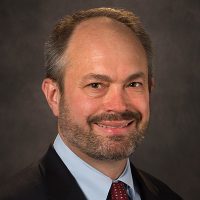
Dr. William Wierda, President & CEO, CLL Global Research Foundation
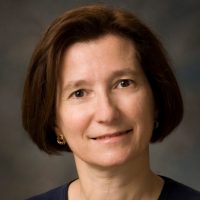
Dr. Alessandra Ferrajoli, The University of Texas MD Anderson Cancer Center
Transcript
Jamie Forward:
So, there’s a large cohort of patients who were on FCR trials. For those patients who had deep remissions but relapsed after many years, do you have any updates on the relapsed patients or basically how long does disease burden stay low? How many convert to high-risk CLL? Kind of a long question. Dr. Wierda, do you want to start?
Dr. William Wierda:
Sure. So, we have a lot of experience with FCR. Dr. Keating developed the FCR regimen. The first trial with FCR was started in the 1990s, and so we have nearly 30 years of follow-up for some of those early patients who went on the FCR regimen. We know that it has a high response rate, a high complete remission rate, and a mediocre MRD-undetectable rate. The MRD-undetectable rate with six cycles of FCR is about 50 percent in the bone marrow.
We know from our long-term follow-up that we think about patients in terms of their IGHV mutation status where patients who have an unmutated immunoglobulin gene will generally be in remission for a reasonable period of time, but their disease pretty consistently will return and they’ll need subsequent therapy. Like more than 90 percent of patients with an unmutated immunoglobulin gene will have their disease relapse and need subsequent therapy. And there is some variability in the length of that remission.
That’s a little bit different than what we saw in patients who have a mutated immunoglobulin gene where about 50 percent of them will remain without relapse of their disease more than 10 years. And that’s the group of patients that we’ve talked about potentially being cured with FCR because their disease isn’t coming back for more than 10 years, and we’re doing follow-up for those patients now looking for MRD by flow cytometry as well as by clonoSEQ, the MRD-6 assay.
And we’re in the process of summarizing some data that we’ve generated recently. I don’t want to discuss that data yet. It’s not published yet, but it should be coming out soon. It’s interesting and gives some interesting insights I think into what remission means and what MRD means and its additional data that gives some insights into that aspect. Realizing that that’s chemoimmunotherapy-based treatment, we don’t use chemoimmunotherapy-based treatment any longer. We use targeted therapy.
And so, one question is: Will we see the same observations with the targeted therapy, the BCL2 inhibitor based fixed-duration treatment like venetoclax (Venclexta) and sonrotoclax and lisaftoclax as we have seen with the chemoimmunotherapy?
So, it’s been a very effective treatment, but chemotherapy in my mind is something that we should be avoiding because it has side effects and toxicities that we don’t want to expose our patients to.